Thursday, December 2, 2021
6:30-7:30pm
The Cooper Union and livestreamed on YouTube
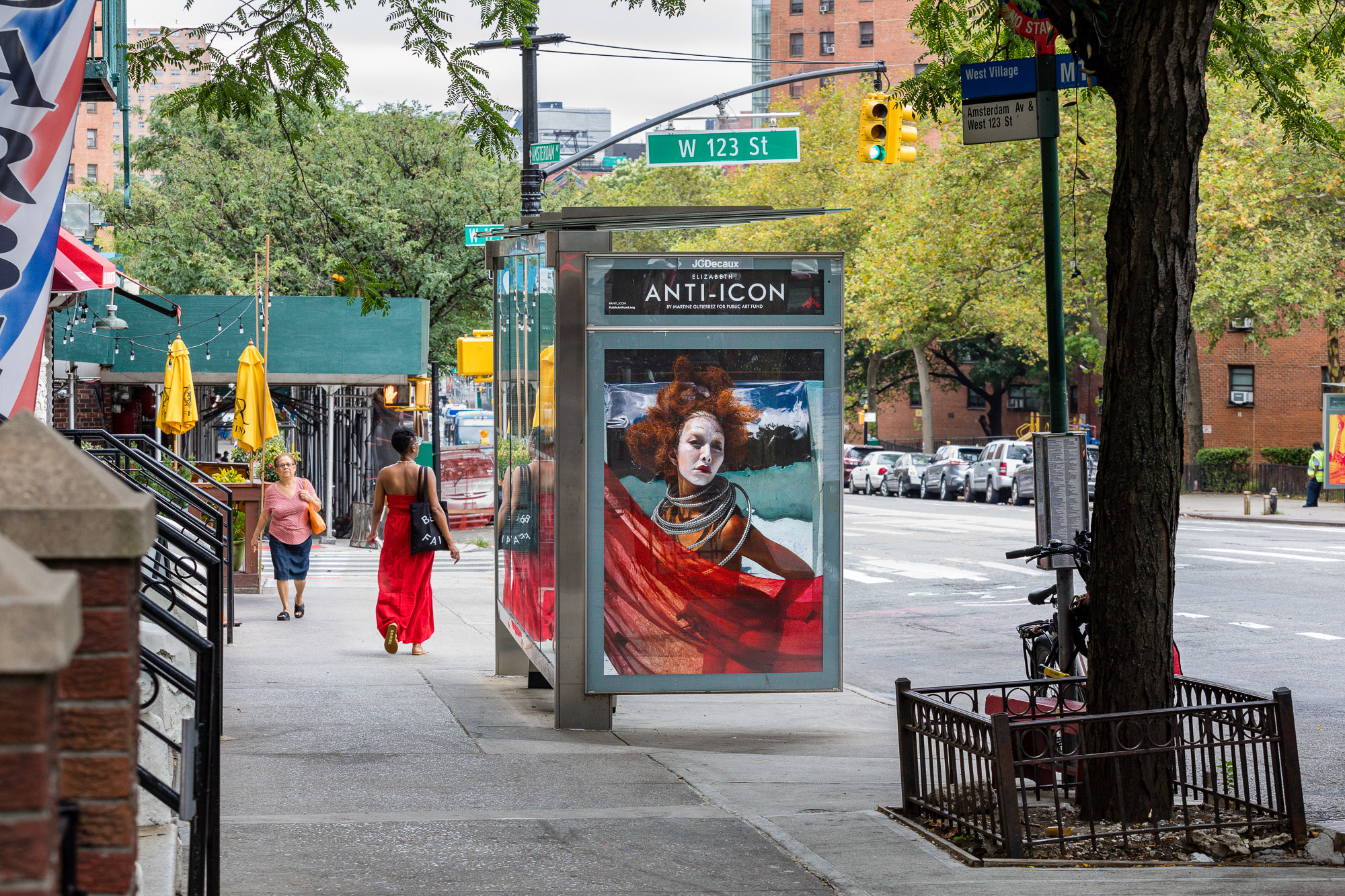
ANTI-ICON is an exhibition of newly commissioned photographs by Brooklyn-based photographer and performance artist Martine Gutierrez (b. 1989, Berkeley, CA). It continues her exploration of identity across the cultural landscapes of gender, race, class, and celebrity. In ten new works, Gutierrez has transformed herself into a multitude of roles, reinterpreting a diverse canon of radical historical and mythological figures. Through each metamorphosis, Gutierrez embodies the spirit of heroines who have achieved legendary status across cultures, over thousands of years, in both art history and popular culture.
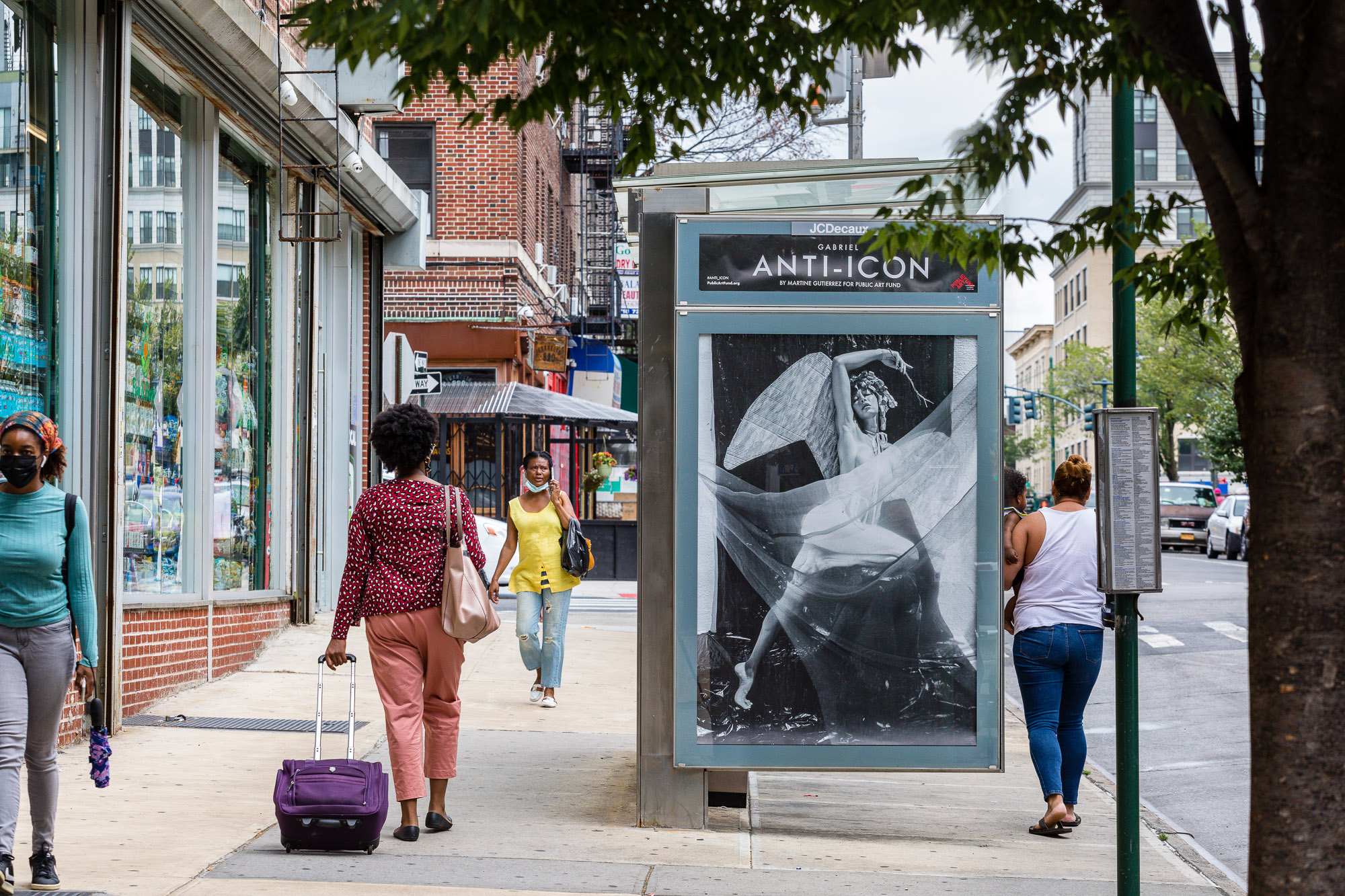
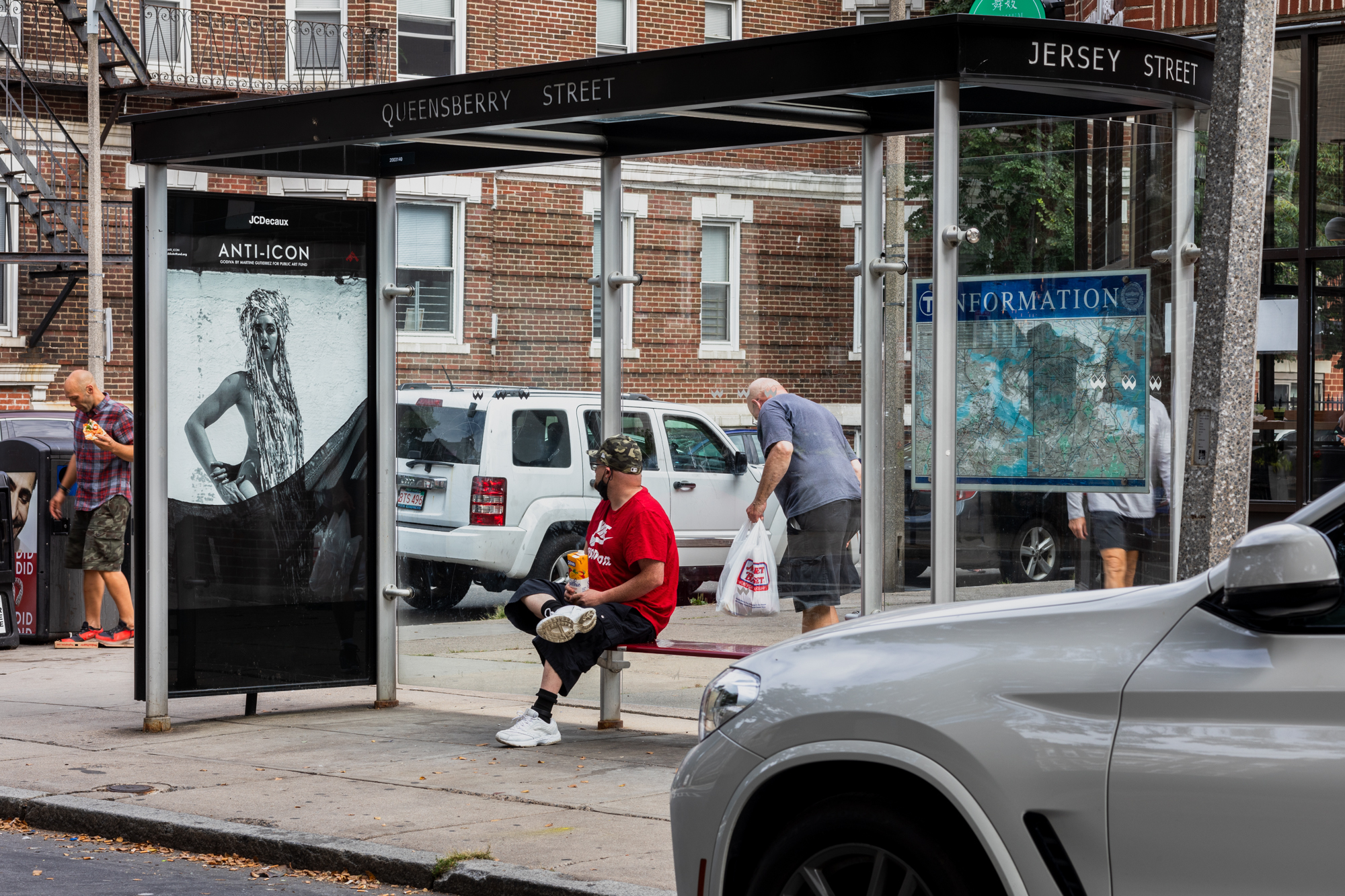
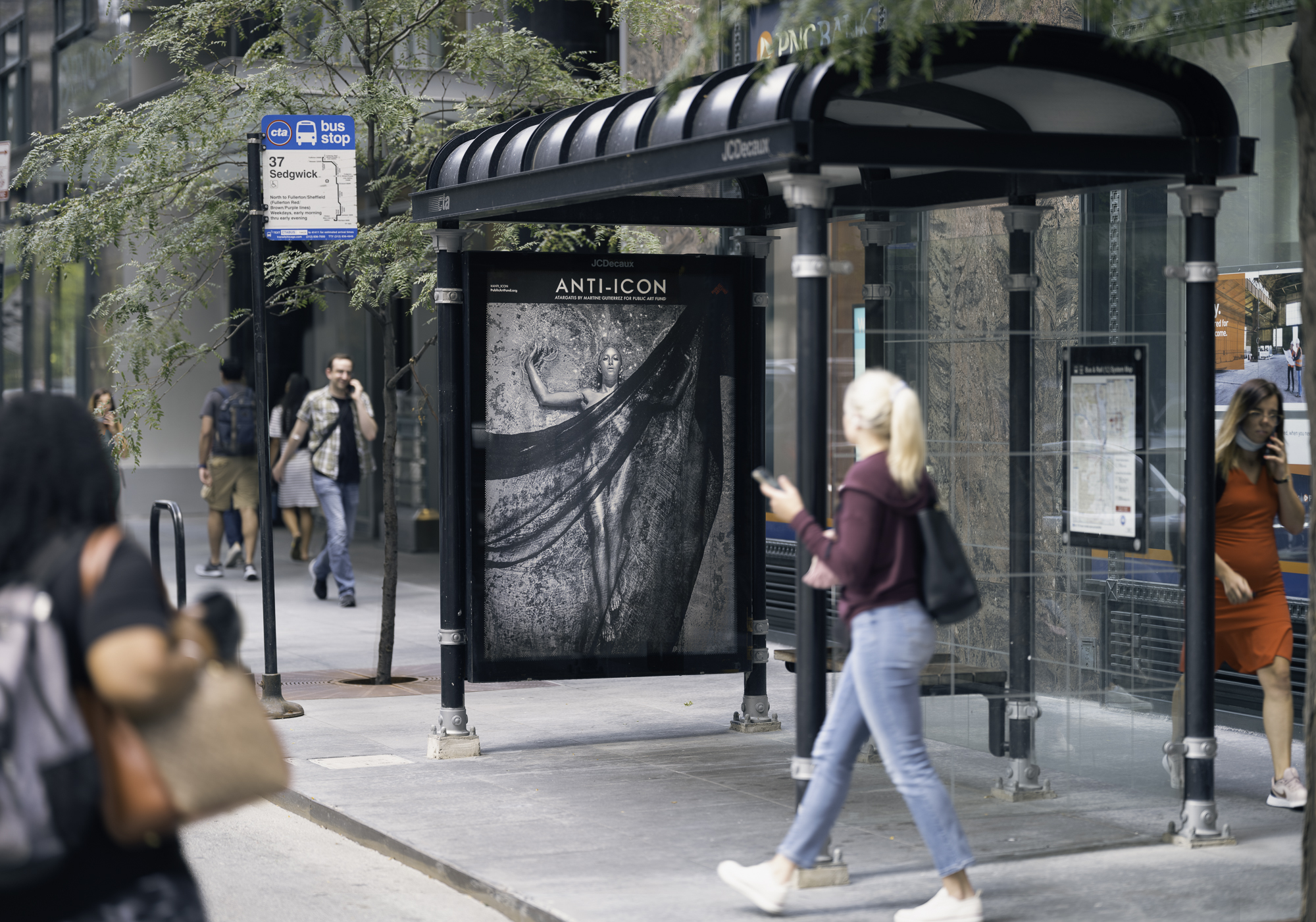
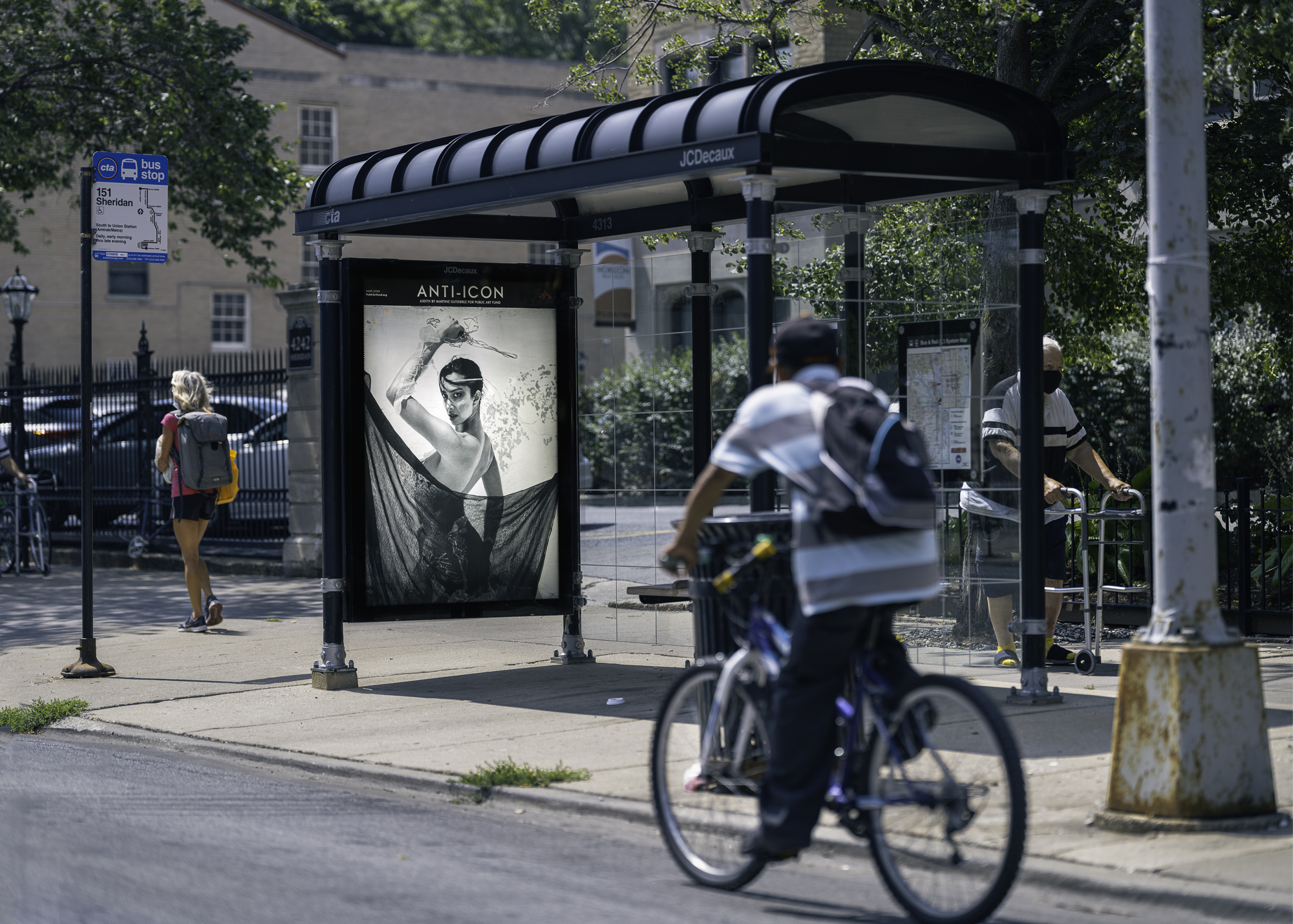
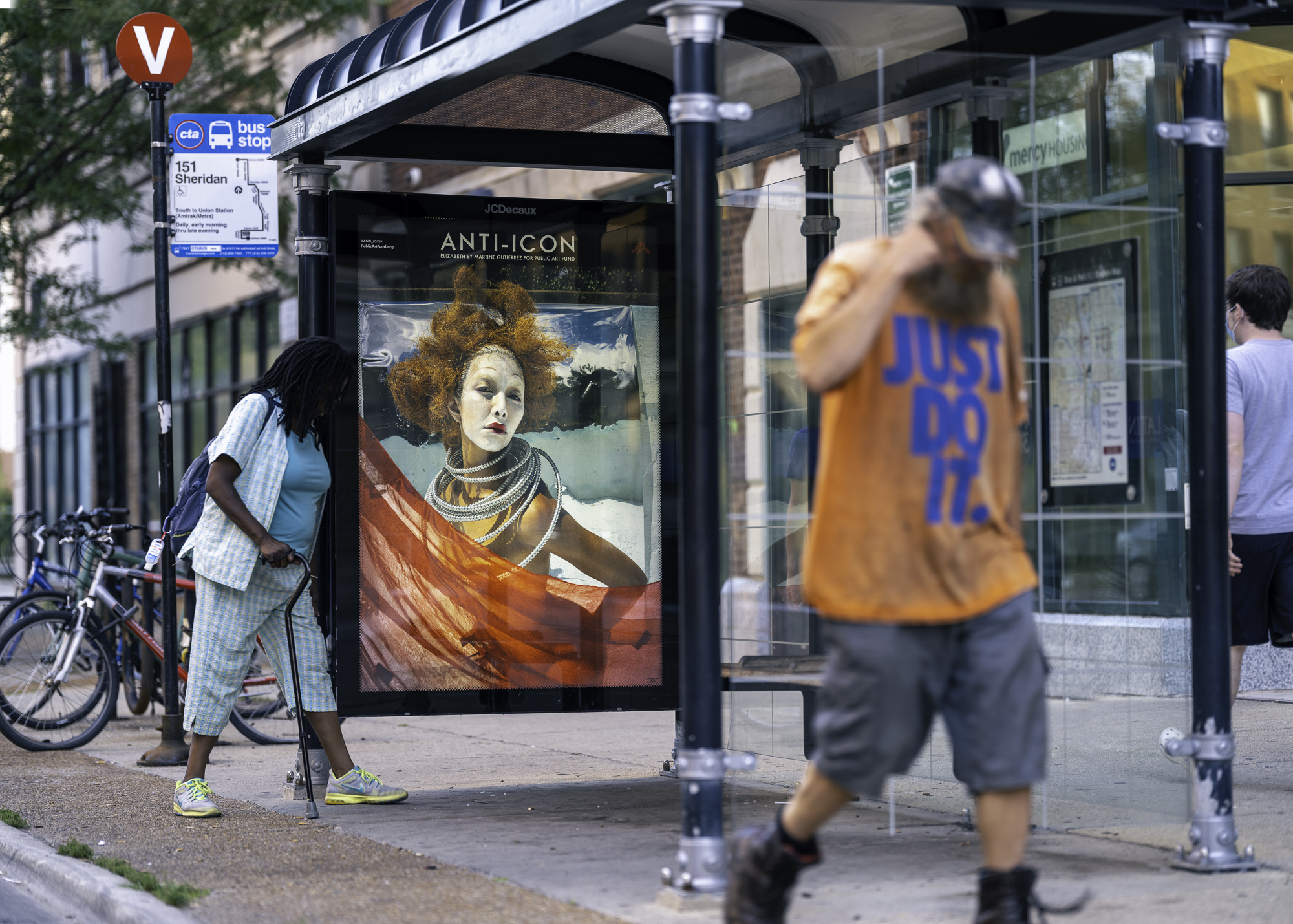
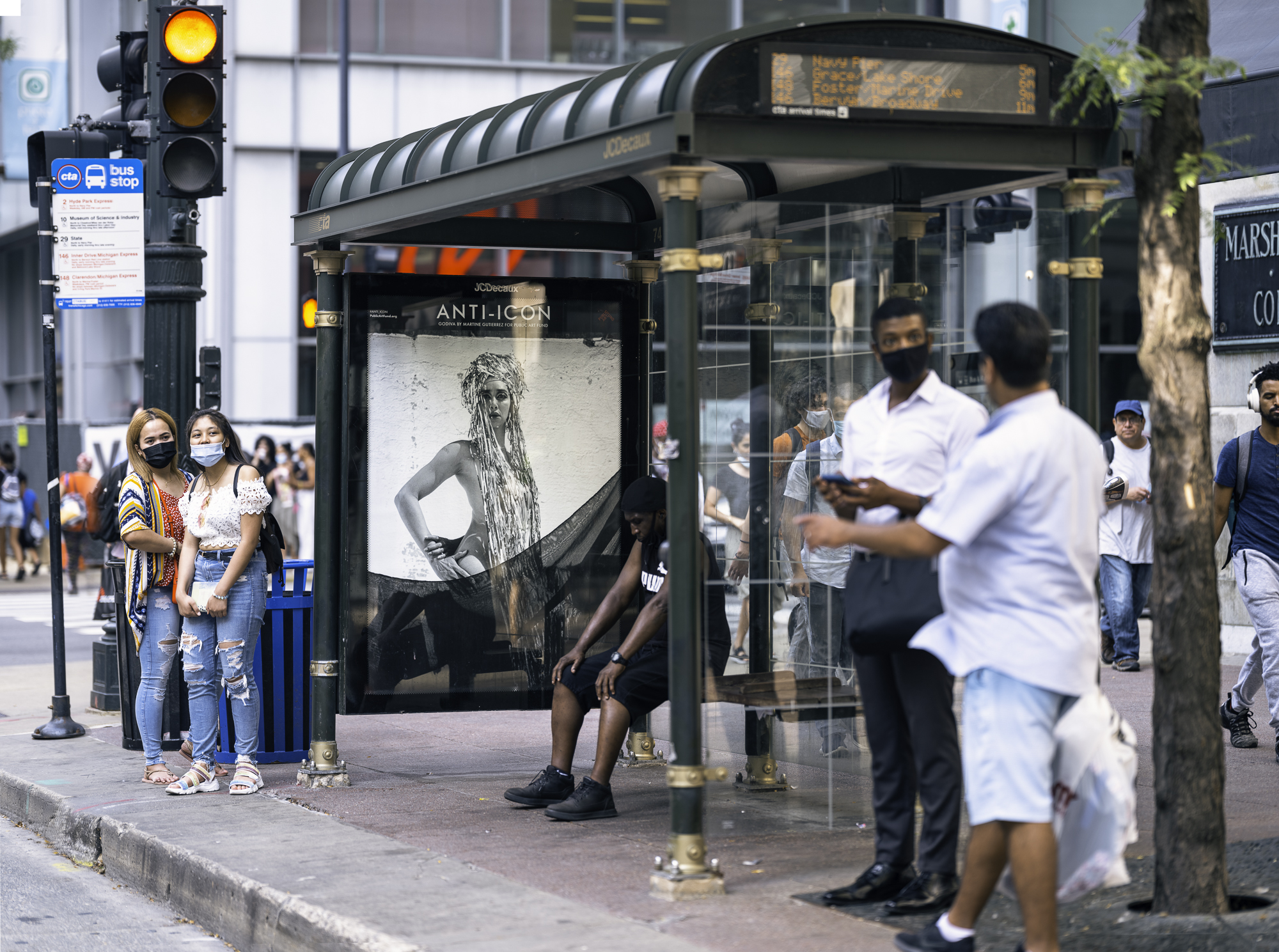
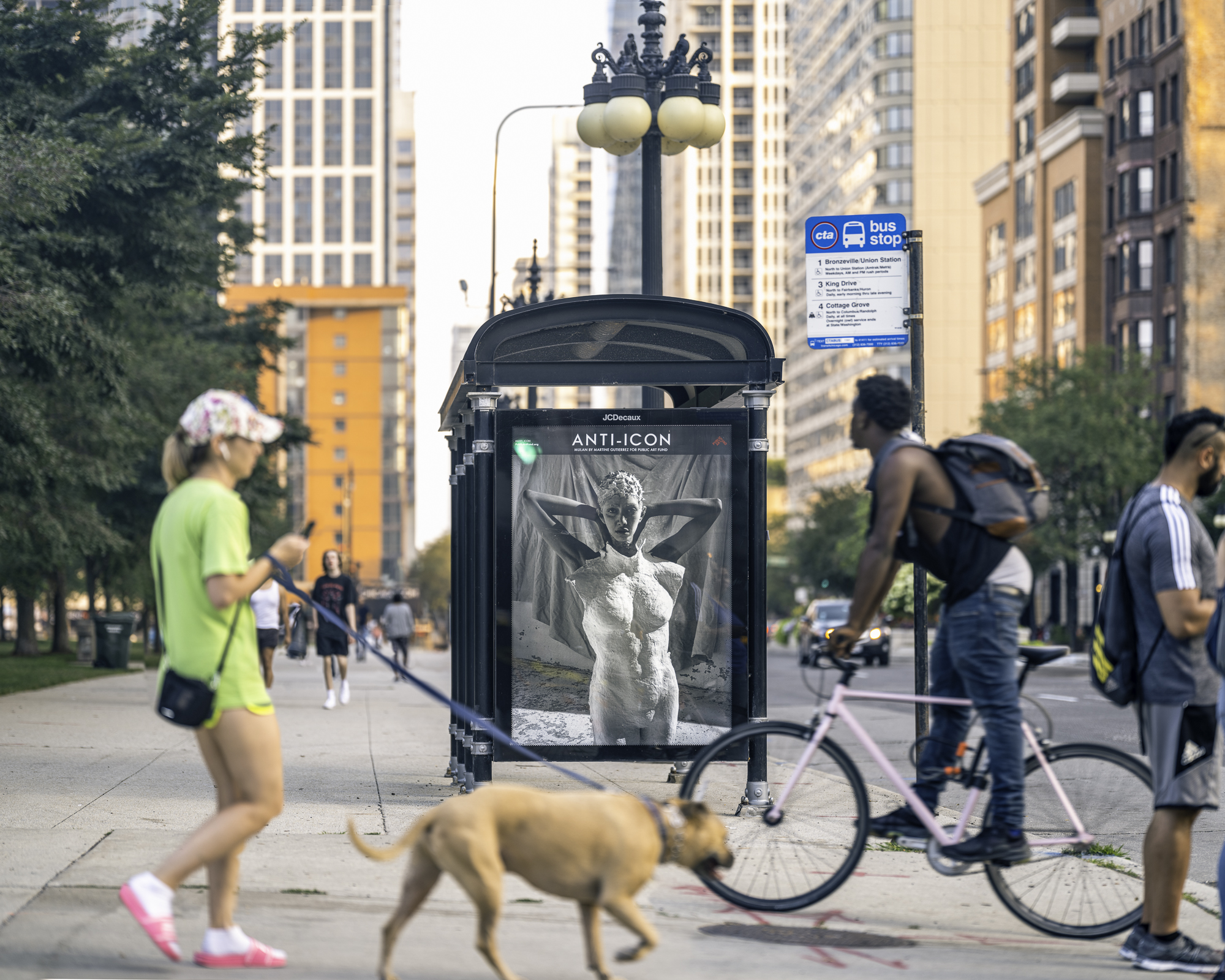
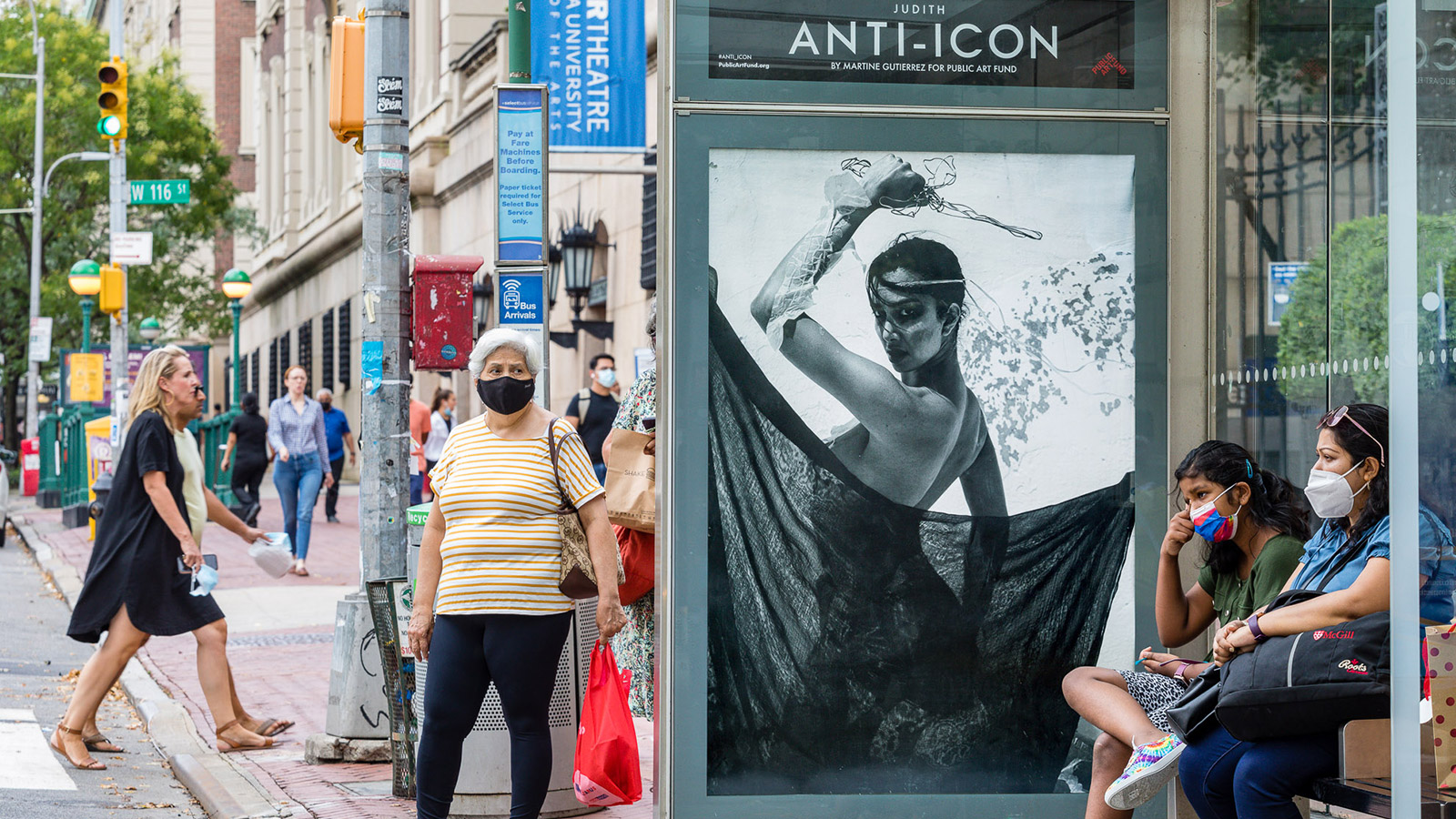
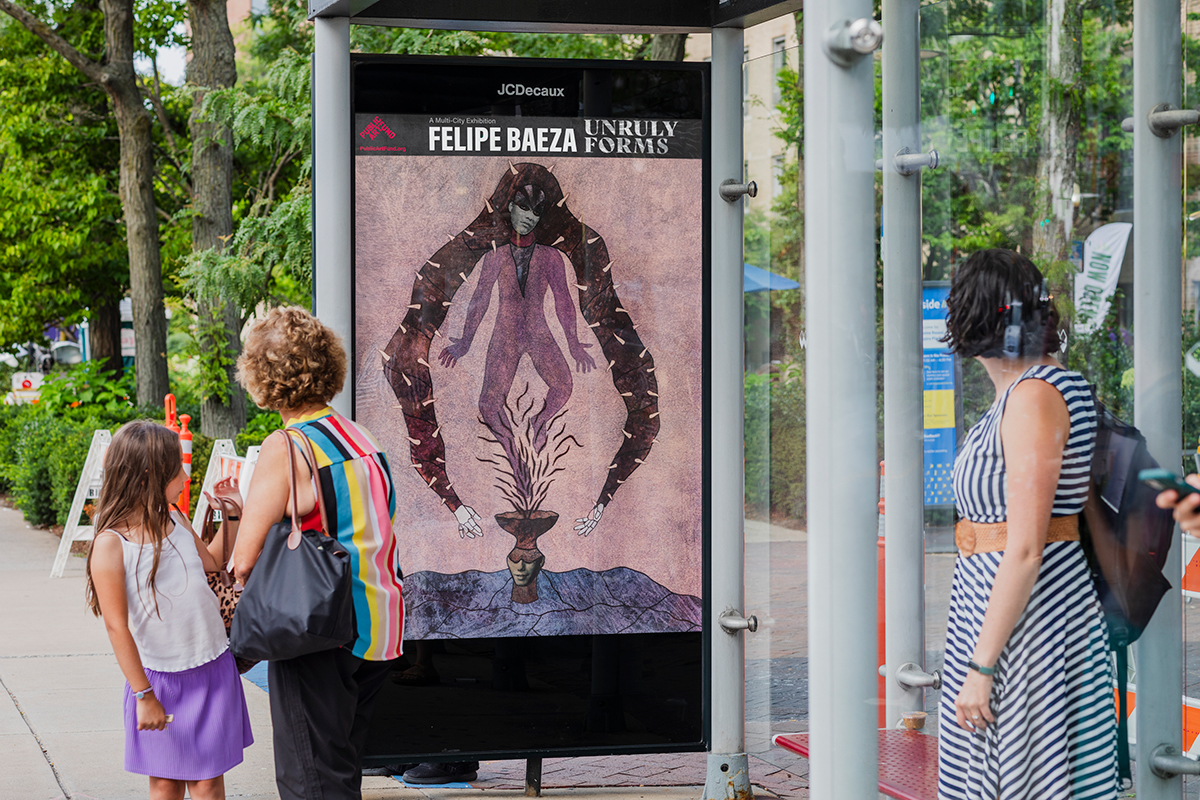
Exhibited on the spaces normally used for advertising on 300 JCDecaux bus shelters across New York City, Chicago, and Boston, the larger-than-life portraits may be encountered on walks or daily commutes. Works are sited in clusters in over 50 neighborhoods in the three cities to give the public opportunities to see multiple photographs on a walk or bus route.
Gutierrez is the sole performer in the series, portraying ten groundbreaking icons: Aphrodite, ancient Greek goddess of love and beauty; Atargatis, Syrian mother goddess of fertility and the moon; Cleopatra, Egyptian ruler famed for her influence on Roman politics; Queen Elizabeth I, England’s second female monarch when the country asserted itself as a major power in politics, commerce, and the arts in the 16th century; Gabriel, angel in the Abrahamic religions believed by many to be able to take on any physical form; Lady Godiva, bold noblewoman from the medieval period who fought for justice for everyday people; Helen of Troy, Greek beauty seen as the cause of the Trojan war; Judith, courageous biblical widow who used her charm to bring down an Assyrian general; Mulan, famed warrior of Chinese folklore who disguised herself as a man to fight in battle; Queen of Sheba, Arabian queen from Jewish, Christian, and Muslim texts known for her wit, power, and wealth. Each is renowned for their resilience, leadership, courage, and influence. For Gutierrez, they are powerful figures, as well as role models for the LGBTQ+ community, with which she identifies.
Gutierrez created the artworks in ANTI-ICON just as the COVID-19 pandemic began, working in a makeshift outdoor studio. Flowers, feathers, twigs, string, cardboard, tarps, paint, plaster, and translucent fabrics act as props and costumes that transform, disguise, and mask her. Framing them as “anti-icons,” Gutierrez reinvents the conventional modes of their representation, while acknowledging their powerful idealized and legendary status. Merging a DIY aesthetic with the stylized language of luxury advertising, Gutierrez has reimagined these icons, evoking a sense of possibility and reinterpretation.
Martine Gutierrez: ANTI-ICON is curated by Public Art Fund Associate Curator Katerina Stathopoulou.
Martine Gutierrez (b. 1989, Berkeley, CA) is an artist, performer, writer, and musician who constructs elaborate narrative scenes to subvert pop cultural tropes in the exploration of identity, both personal and collective intersectional to race, gender, class, indigeneity, and culture. Her amass of media—ranging from billboards and episodic films to music videos and renowned magazine, Indigenous Woman—produce the very conduits of advertising that sell the identities she disassembles. Gutierrez hybridizes the industry’s objectification of sex with the individual’s pursuit of self, satirically undermining the aesthetics of what we know. While she manufactures “celebrity” to pass as multinational corporations, it is Gutierrez herself who executes every role—simultaneously acting as subject, artist and muse.
Gutierrez received her BFA from the Rhode Island School of Design in 2012. She is also a published musician and has produced several commercial videos. Gutierrez lives and works in Brooklyn, New York.


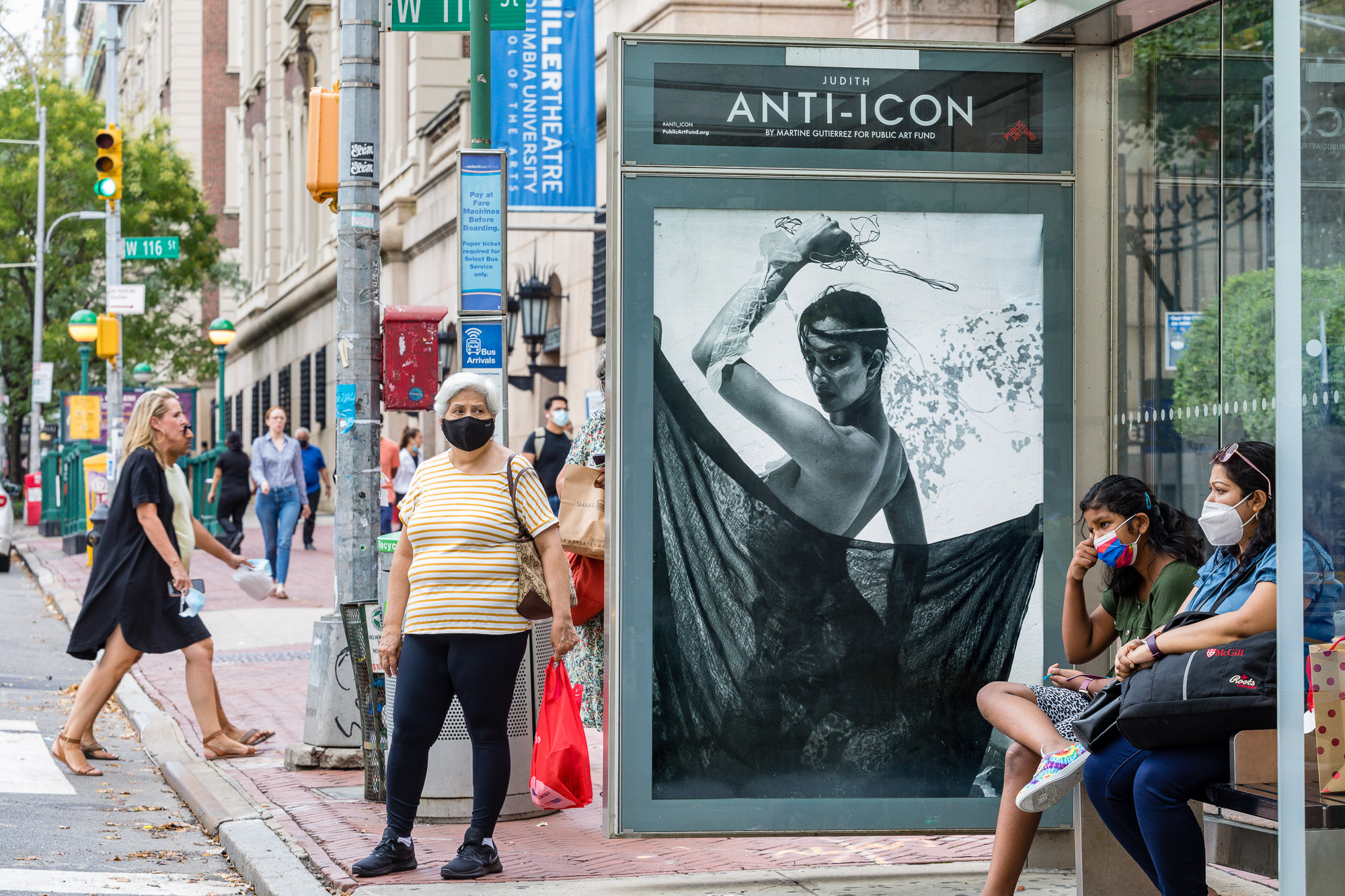
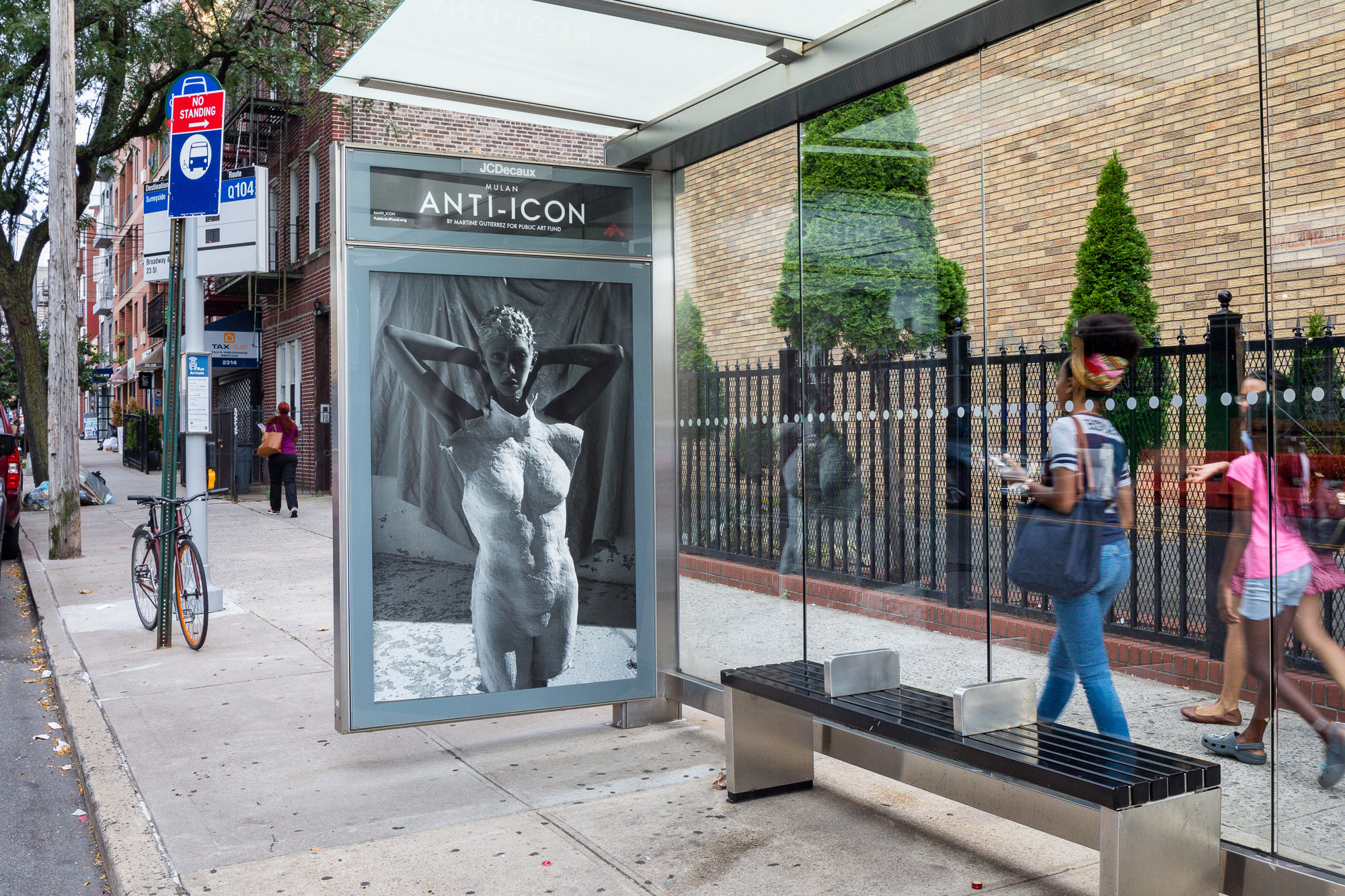
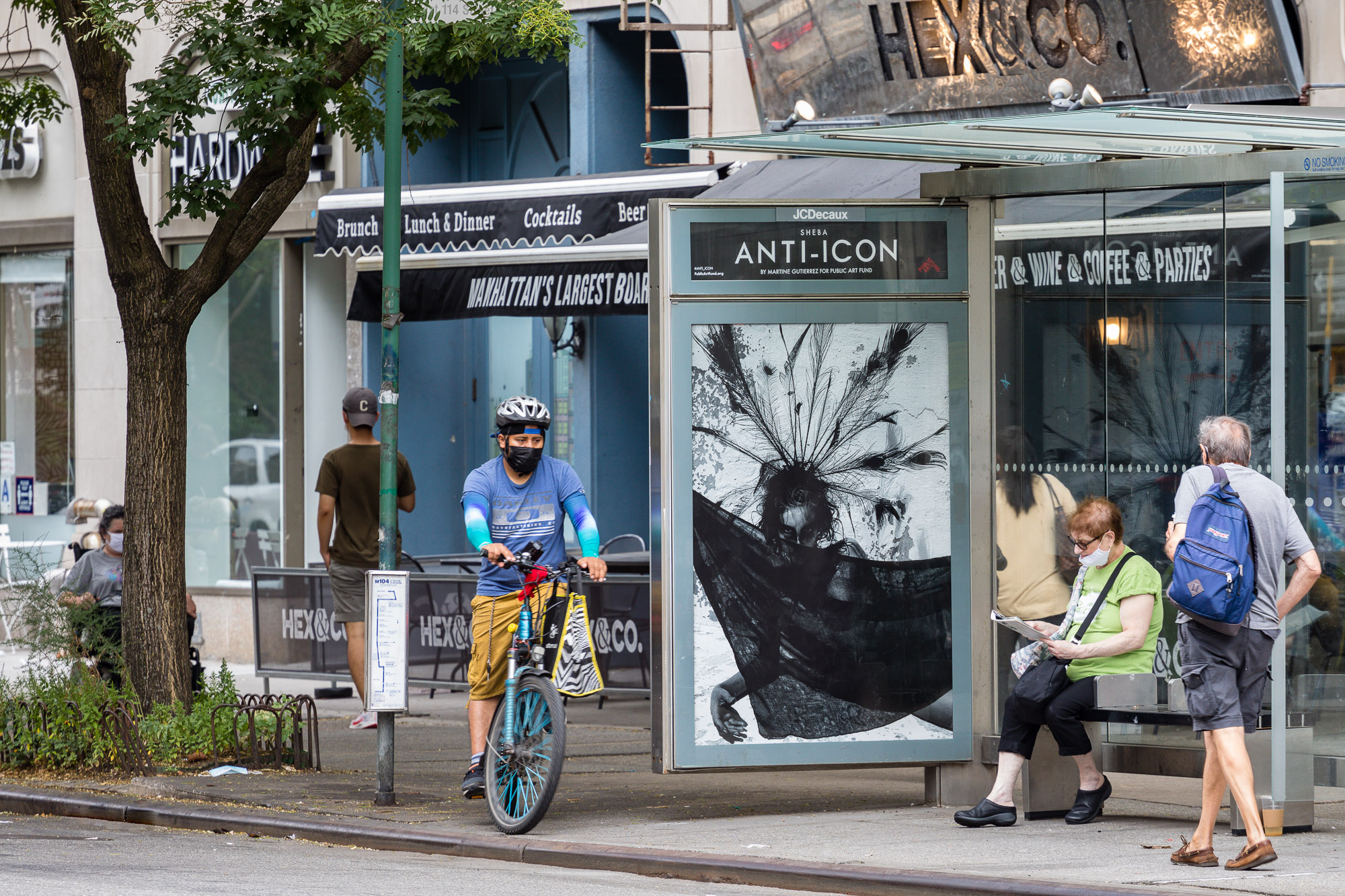


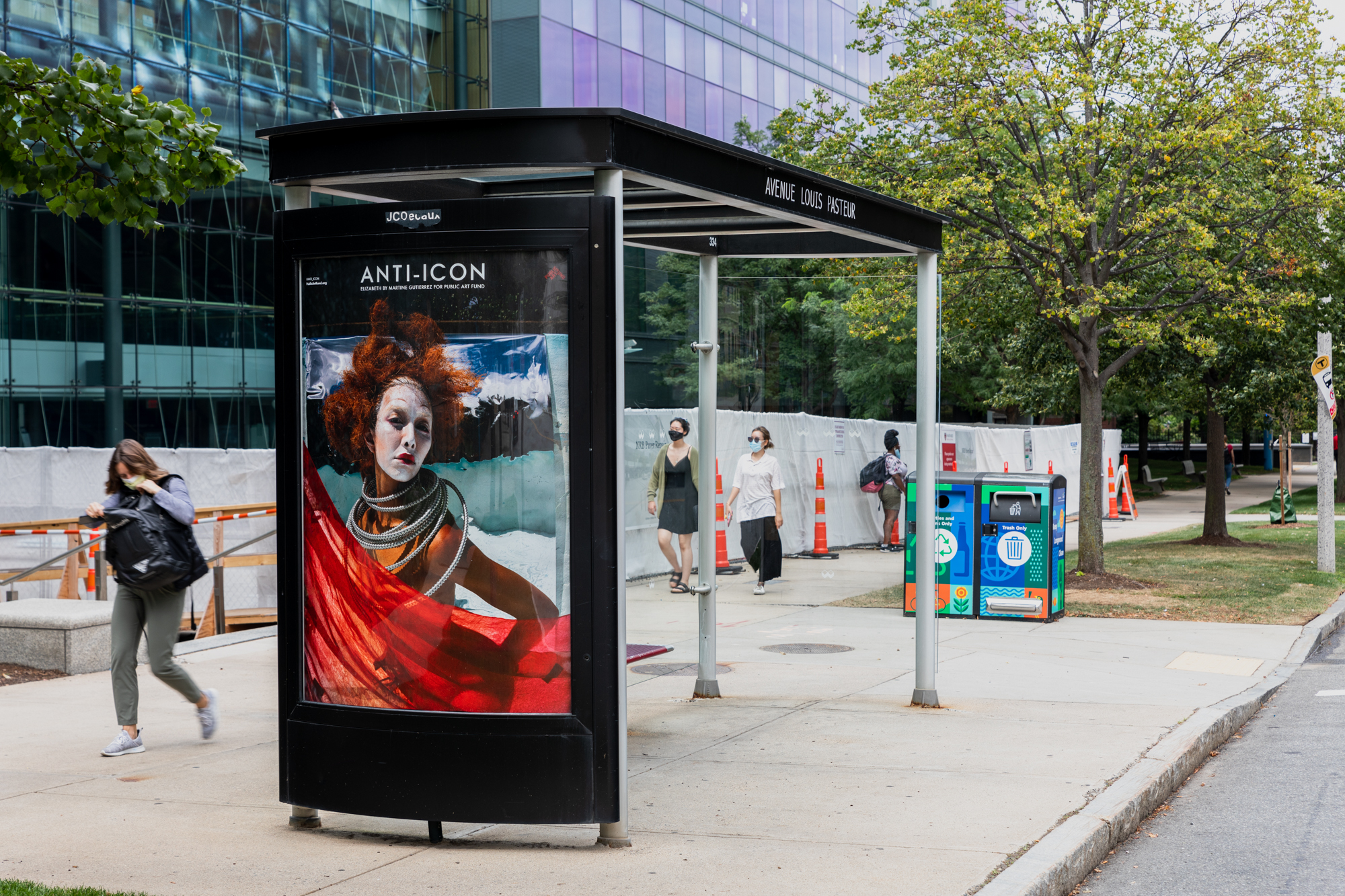




ANTI-ICON Mythos by Martine Gutierrez
In the culmination of scripture, from the reincarnation of Buddha on the “wheel of becoming” throughout Asia, to the legends of celestial gods in Greek mythology, or the writings of Mesopotamian patriarchs that formed the basis of the Abrahamic religions—we as storytellers are inspired with the courage and devotion of history’s heroines.
As we dawn a new century, in place of biblical kings, the reign of industry adorns our modern altar—the spectacular fashions of slave labor grace our influencers and their followers. Savants of culture. Maximalist image makers. Visibility clickbait transitioned to sustain relevance. Only, an ANTI-ICON cannot be produced—their paths pioneered out of necessity, as none other lay forged.
On the day of God’s reckoning, the Prophet Isaiah warns, “the Lord will take away the finery of the anklets, the headbands, the armlets, the sashes, the perfume boxes, and the amulets; the signet rings and the nose rings; the festal robes, the mantles, the cloaks, and the handbags,” eighth-century BCE (Isaiah 3:18-22)[1]. We try to buy ourselves in the belief that authenticity is a brand. “Think different.” Apple. “Have it your way.” Burger King. “Just do it.’“ Nike. “It’s all inside.” JCPenney.
Our contemporary Rome, year 2021—wages at a precipice. Another religion has failed us, archived among the ruins of Olympus. Traditions of magic that once promised to transcend purpose are now theorized by the academia of science. The Princess of Pop is in fact, a slave for you. In the land of gods and monsters—whose information is power, and what does a sex-change? When summoning direction in these uncertain times, the chronicles of the divine feminine endure—the leading women of mankind—femmes of our forefathers—daddy’s deities—perched on the rocks of sirens. Neither celebrity nor darling, but a symbol martyred. ANTI-ICON—the radical ethos of femininity, challenging history through her strength, perseverance and beauty. Beauty we covet and fear, censor and mourn, envy and punish.
“There’s no excuse for the young people not knowing who the heroes or heroines are or were.” Nina Simone. Whether a Magdalene or Mulan, Joan of Arc or Judith, she is a prophecy destined—both born before her time and visionaire of a future that will come to pass, fallen from the norms of society in life, to rise unto an idol in death. Even if worshipped as the Venus Aphrodite or Queen Cleopatra, she is the simultaneous mythos of aspiration annotated by history.
A threat to how power describes the world. She becomes something far greater than armies, something strong enough to topple kings and generals, to crumble nations and birth empires—the faith of change. “We are not monoliths.” Blake Abbie. “Every few hundred years evolution leaps forward.” X-Men. “I’m every woman.” Whitney Houston. ANTI-ICON—the collapse of the pedestal, the end of the chosen one, the hegemony of definition and image undone. “You shall not make for yourself an image in the form of anything in heaven above” The second commandment. “No more idols.” Devan Diaz. “No more Angels.” Victoria’s Secret. “Fuck Madonna. Free Britney.” Dara. “Be transformed by the renewing of your mind.” Lucas Habte quoting Romans 12:1 [2]. “Be your childhood hero.” Fernando Cerezo III. “Where dreams come true.” Disney. “The truth is out there.” X-Files, “Is it in you?” Gatorade.
[1] Jean-Pierre Isbouts, “Women of the Bible: The Life of a Woman In Biblical Times.” National Geographic, October 9, 2020, p. 42.
[2] The Holy Bible, New King James Version. Copyright © 1982 by Thomas Nelson.


ANTI-ICON es una exposición de fotografías de Martine Gutierrez (1989, Berkeley, California), fotógrafa y artista performática radicada en Brooklyn. Este nuevo encargo le permite seguir explorando la identidad a través de las perspectivas culturales del género, la raza, la clase y la fama.
En una decena de nuevas obras, Gutierrez se transformó en una multiplicidad de personajes, reinterpretando un canon diverso de radicales figuras históricas y mitológicas. Con cada metamorfosis, Martine Gutierrez encarna el espíritu de algunas heroínas convertidas en leyenda en diferentes culturas a lo largo de miles de años, tanto en la historia del arte como en la cultura popular.
Expuestos en los espacios publicitarios de 300 paradas de autobús de JCDecaux por toda Nueva York, Chicago y Boston, los exuberantes retratos se pueden encontrar en cualquier caminata o trayecto diario. Las obras están instaladas en conjuntos en más de 50 vecindarios de las tres ciudades, con el objetivo de que el público tenga la oportunidad de ver varias fotografías en una misma caminata o recorrido de autobús.
Martine Gutierrez es la única modelo de toda la colección, en la que representa a diez íconos que hicieron historia: Afrodita, diosa del amor y la belleza en la Antigua Grecia; Atargatis, diosa madre de la fertilidad y de la luna en Siria; Cleopatra, reina egipcia famosa por su influencia en la política romana; la reina Isabel I, segunda monarca mujer de Inglaterra en el siglo XVI, cuando el país se afianzó como potencia política, económica y artística; el arcángel Gabriel, uno de los ángeles de las religiones abrahámicas considerado capaz de adoptar cualquier forma física; Lady Godiva, valiente dama de la nobleza medieval que luchó por la justicia del pueblo; Helena de Troya, belleza griega que fue vista como la causa de la guerra de Troya; Judit, intrépida viuda bíblica que utilizó su encanto para derrocar a un general asirio; Mulán, famosa guerrera china que se vistió de hombre para unirse al ejército; y la reina de Saba, reina árabe que figura en textos judíos, cristianos y musulmanes, conocida por su ingenio, poder y riqueza. Cada personaje se caracteriza por la resiliencia, el liderazgo, el coraje y la influencia. Según Gutierrez, estas figuras no solo son poderosas sino también referentes de la comunidad LGBTQ, con la cual se identifica.
Martine Gutierrez creó las obras de ANTI-ICON justo cuando comenzó la pandemia de la COVID-19, lo que la llevó a trabajar en un estudio improvisado al aire libre. Con disfraces y accesorios de flores, plumas, ramas, telas transparentes, cuerda, cartón, lona, pintura y yeso, la artista se reviste, transforma y enmascara. Al plantear estos personajes como “antiídolos”, Martine Gutierrez reinventa los modos convencionales en los cuales se los representa, sin dejar de reconocer su poderoso carácter idealizado y legendario. Al fusionar una estética de bricolaje con el lenguaje estilizado de las publicidades de lujo, Martine Gutierrez reinterpreta a estos ídolos, lo que evoca cierto optimismo y una posibilidad de resignificación.
La exposición ha sido curada por Curadora asociada de Public Art Fund Katerina Stathopoulou
Martine Gutierrez (n. 1989) es artista, intérprete, escritora y música, y se dedica a construir complejas escenas narrativas con el objetivo de subvertir los tropos de la cultura popular y explorar la identidad, tanto personal como colectiva, en las interseccionalidades de raza, género, clase, indigeneidad y cultura. El amplio caudal de medios artísticos que utiliza —que incluye desde vallas publicitarias y episodios cinematográficos hasta videos musicales y la destacada revista Indigenous Woman—, engendra los mismos canales de publicidad que venden las identidades que ella desarma. La artista crea un híbrido entre la objetivación sexual presente en la industria y la búsqueda de la propia identidad, y satíricamente socava la estética de todo lo que conocemos. Si bien construye la figura de “celebridad” como si fuera la de una empresa multinacional, es la misma Martine Gutierrez quien desempeña cada papel: actúa a la vez como protagonista, artista y musa.
Martine Gutierrez obtuvo en 2012 la licenciatura en Bellas Artes en la Escuela de Diseño de Rhode Island. También es una artista reconocida en el mundo de la música y ha producido varios videos comerciales. La artista vive y trabaja en Brooklyn, Nueva York.
ANTI-ICON (ANTIÍDOLO) de Martine Gutierrez
En la cumbre de las sagradas escrituras, desde la reencarnación de Buda en la “rueda de la existencia” a lo largo de Asia hasta las leyendas de los dioses celestiales en la mitología griega o los escritos de los patriarcas mesopotámicos que sentaron las bases de las religiones abrahámicas, quienes creamos narraciones nos dejamos inspirar por el coraje y la devoción de las heroínas de la historia.
En los albores del nuevo siglo, en lugar de reyes bíblicos, nuestros altares modernos están adornados con el imperio de la industria: las espectaculares modas del trabajo esclavo son el decorado de nuestros influencers y sus seguidores. Eruditos de la cultura. Creadores de imágenes maximalistas. Ciberanzuelos de la visibilidad que mutan para mantenerse relevantes. Pero no se puede producir un antiídolo: este forja su propio camino por pura necesidad, pues no hay otro trazado.
En el siglo VIII a. C, el profeta Isaías ya advertía que, en el día del juicio final, “el Señor hará desaparecer los atavíos de los tobillos, las diademas, los brazaletes, los ceñidores, los perfumes y los amuletos, los anillos grabados y los aros de la nariz, las ropas de gala, las túnicas, los velos y los bolsos”. (Isaías 3:18-22) [1]. Intentamos comprar nuestra identidad creyendo que la autenticidad es una marca. “Piensa diferente”. Apple. “Hecho a tu manera”. Burger King. “Solo hazlo”. Nike. “Lo importante es lo de adentro”. JCPenney.
Nuestra Roma contemporánea, año 2021, de cara al abismo. Otra religión que nos ha fallado, archivada entre las ruinas del Olimpo. Las tradiciones de lo mágico, que alguna vez prometieron trascender los límites, ahora son reflexiones teóricas del mundo académico. La princesa del pop es, efectivamente, una esclava para ti. En la tierra de los dioses y los monstruos, ¿la información de quién es la que tiene poder, y qué modifica un cambio de sexo? Al buscar un rumbo en estos tiempos de incertidumbre, perduran las crónicas de lo divino femenino: las principales protagonistas de la humanidad —las mujeres de nuestros antepasados— y las deidades de los patriarcas, posadas sobre las rocas de las sirenas. Ni encantadoras ni célebres, sino mártires simbólicas. ANTI-ICON: el ethos radical de la femineidad, que desafía la historia a través de su fuerza, perseverancia y belleza. Belleza que está sujeta a nuestras codicias y temores, censuras y lamentos, envidias y castigos.
“No hay excusa para que los jóvenes no sepan quiénes son o fueron los héroes y heroínas”. Nina Simone. Ya sea María Magdalena o Mulán, Juana de Arco o Judit, ella es una profecía del destino: nacida antes de su tiempo y a la vez visionaria de un futuro que vendrá, infiel a las normas de la sociedad en vida, para alzarse como un ídolo en la muerte. Incluso si se la venera como la Venus Afrodita o la reina Cleopatra, ella es el mythos simultáneo de la aspiración según la historia.
Una amenaza para la forma en que el poder describe al mundo. Ella se convierte en algo mucho más grande que los ejércitos, algo tan fuerte que derroca a reyes y generales, que derrumba naciones y engendra imperios: es la fe del cambio. “No somos monolitos”. Blake Abbie. “Cada cientos de años, la evolución da un salto hacia adelante”. X-Men. “Yo soy todas las mujeres”. Whitney Houston. ANTI-ICON: el colapso del pedestal, el fin del elegido, la ruina de la imagen y la definición hegemónicas. “No te harás imagen, ni ninguna semejanza, de lo que esté arriba en el cielo”. Segundo mandamiento. “Basta de ídolos”. Devan Diaz. “Basta de ángeles”. Victoria’s Secret. “A la mierda con Madonna. Liberen a Britney”. Dara. “Transfórmate por medio de la renovación de la mente”. Lucas Habte citando Romanos 12:1 [2]. “Conviértete en el héroe de tu infancia”. Fernando Cerezo III. “Donde los sueños se hacen realidad”. Disney. “La verdad está ahí afuera”. Los expedientes secretos X. “¿Está en ti?” Gatorade.
[1] Isbouts, Jean-Pierre. “Las mujeres de la biblia: la vida de una mujer en tiempos bíblicos”. National Geographic, 9 de oct. de 2020, pp. 42–42.
[2] La Santa Biblia, nueva versión del rey Jacobo. Copyright © 1982 de Thomas Nelson
Leadership support for ANTI-ICON is provided by Jennifer & Matthew Harris with additional support from the Daniel and Estrellita Brodsky Family Foundation; Les Christoffel & Paul Greene; Steve Corkin & Dan Maddalena; Jeffrey Fraenkel & Frish Brandt, Fraenkel Gallery; Ryan Lee Gallery; Kathleen McDonough & Edward Berman; and Linda R. & Andrew Safran.
ANTI-ICON is made possible by the New York State Council on the Arts with the support of the Office of the Governor and the New York State Legislature.
Public Art Fund gratefully acknowledges the partnership of JCDecaux.
Cultured is the official magazine partner of ANTI-ICON.
Public Art Fund is supported by the generosity of individuals, corporations, and private foundations including major support from Abrams Foundation, the Charina Endowment Fund, the Joseph and Joan Cullman Foundation for the Arts, The Fuhrman Family Foundation, The Marc Haas Foundation, Hartfield Foundation, William Talbott Hillman Foundation-Affirmation Arts Fund, the Donald A. Pels Charitable Trust, Red Crane Foundation, and The Silverweed Foundation.
Public Art Fund exhibitions are also supported in part with public funds from the New York City Department of Cultural Affairs in partnership with the City Council.







We use cookies to improve your web experience, no personal information is stored. Privacy Policy