
Thursday, September 30, 2021
6:30-7:30pm
The Cooper Union and livestreamed on YouTube
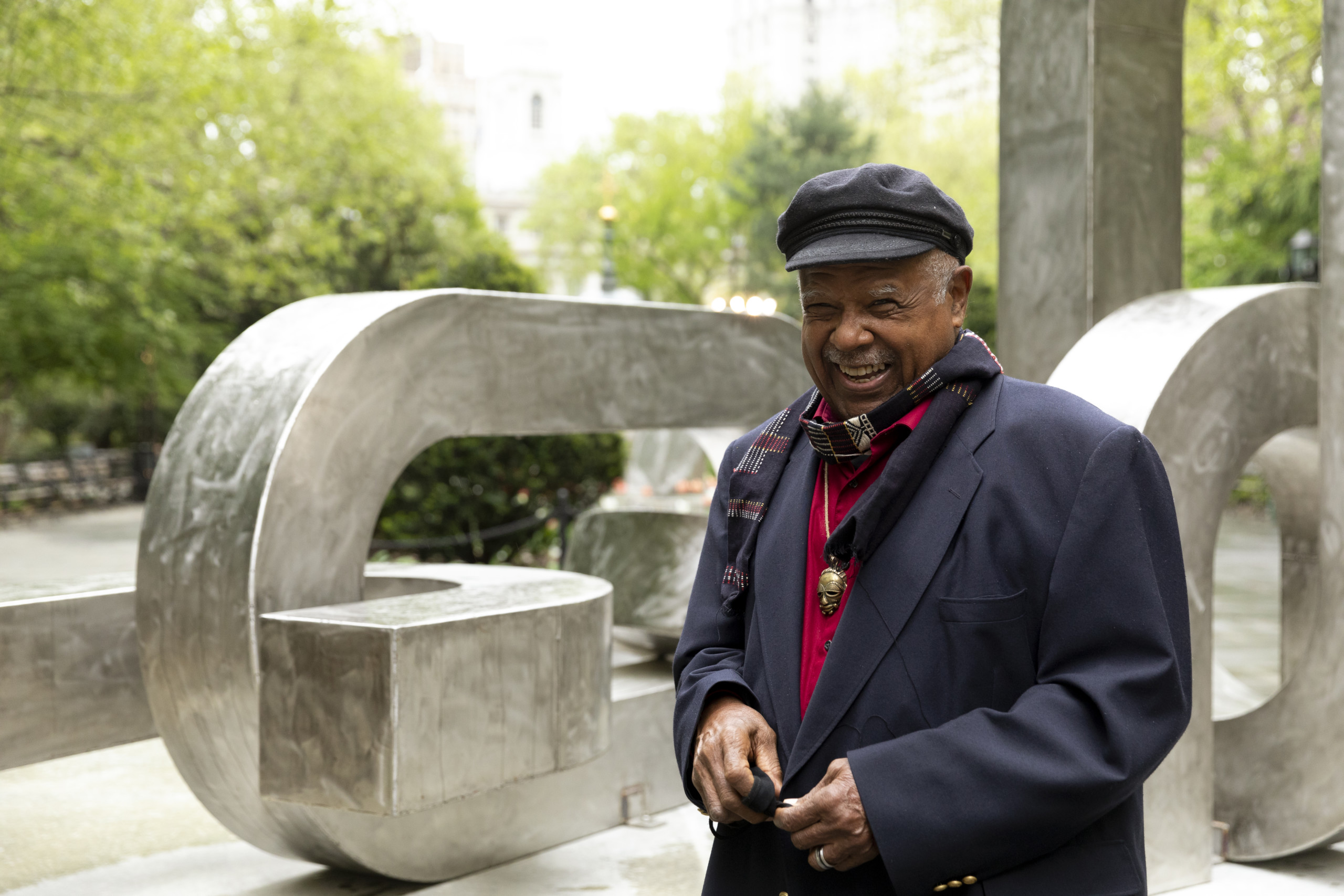
Born in Houston, Texas, Melvin Edwards (b. 1937) began his artistic career at the University of Southern California, where he met and was mentored by Hungarian painter Francis de Erdely. In 1965, the Santa Barbara Museum of Art organized Edwards’ first solo exhibition, which launched his professional career. He moved to New York City in 1967, where shortly after his arrival, his work was exhibited at the newly opened Studio Museum in Harlem, and in 1970 he became the first African American sculptor to have works presented in a solo exhibition at the Whitney Museum of American Art in New York City.
Edwards is best known for his sculptural series Lynch Fragments, which spans three periods: the early 1960s, when he responded to racial violence in the United States; the early 1970s, when his activism concerning the Vietnam War motivated him to return to the series; and from 1978 to the present, as he continues to explore a variety of themes, including his personal connection to Africa. Edwards first traveled to the continent in the 1970s with his late wife, the poet Jayne Cortez, and has returned to Africa many times, teaching welding in different countries before ultimately establishing a studio in Dakar, Senegal, in 2000.
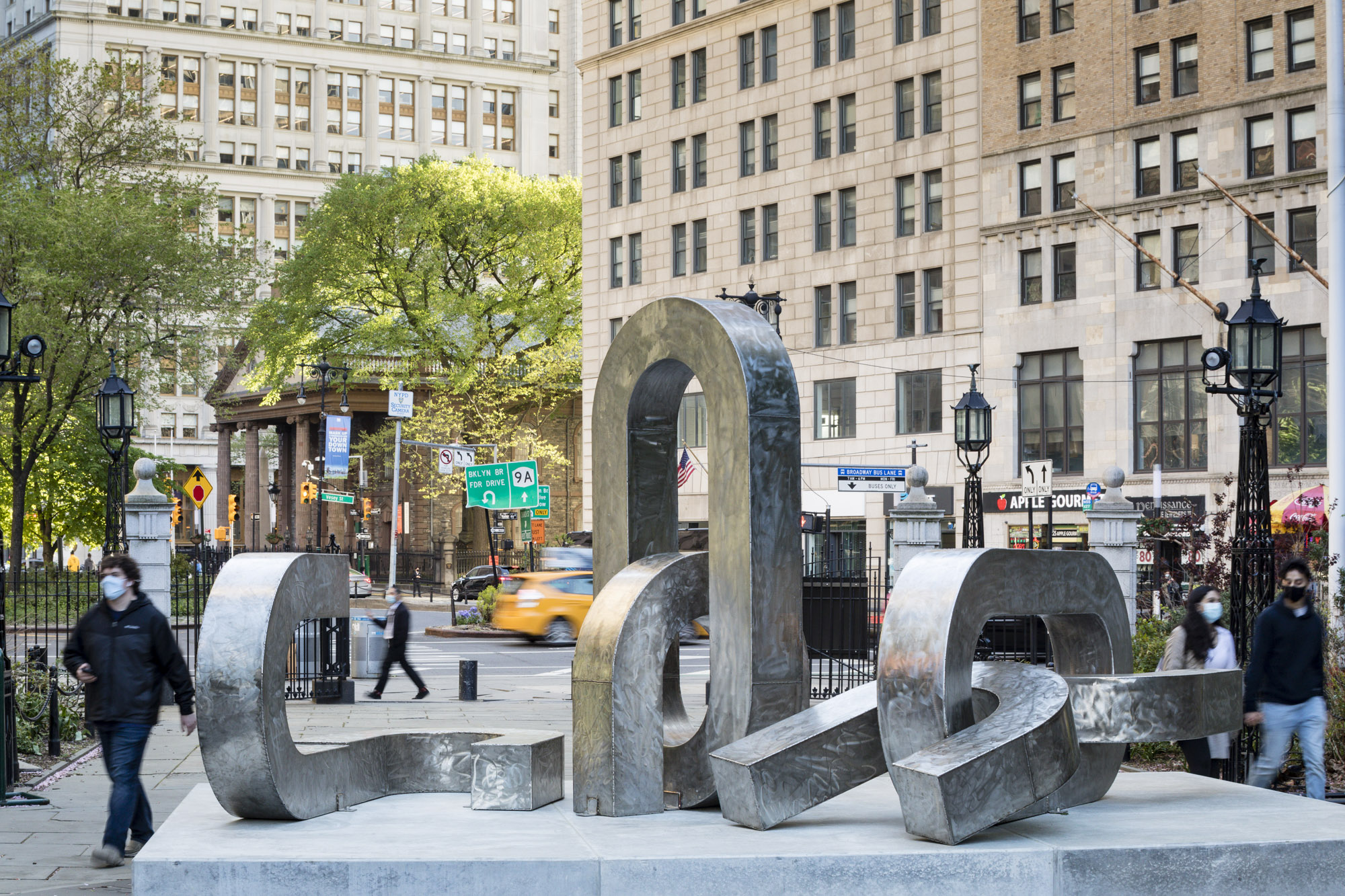
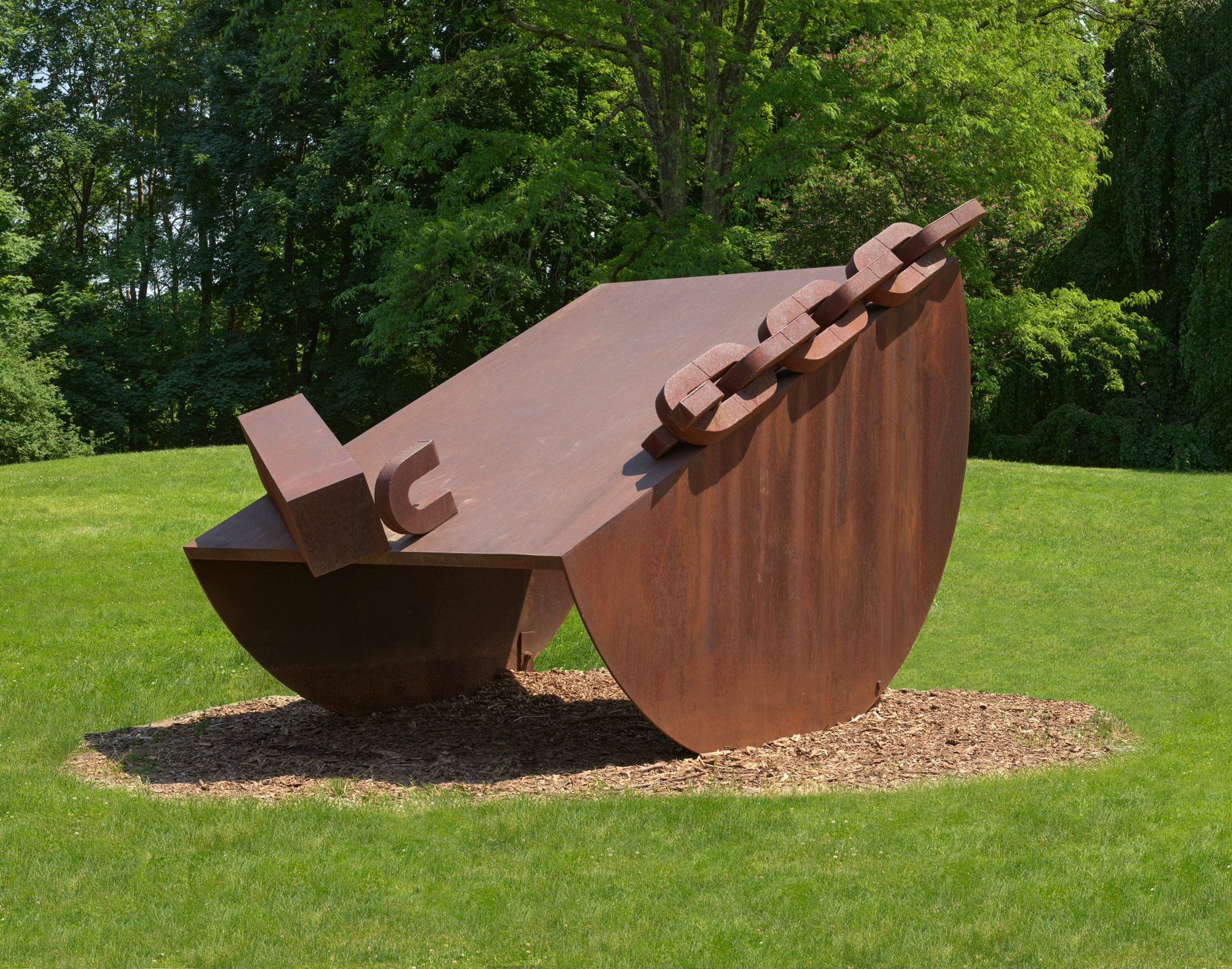
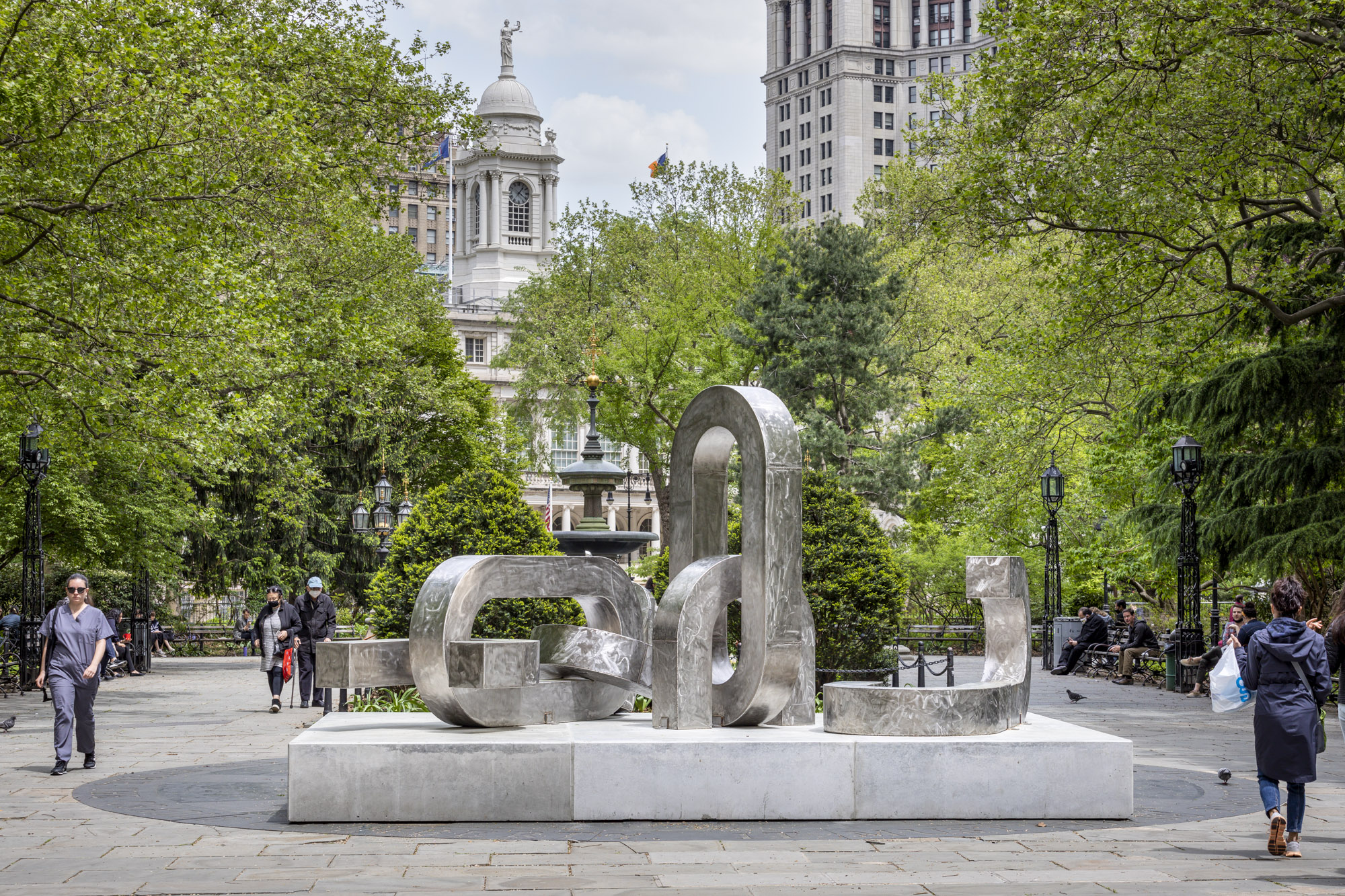
Edwards has produced more than 20 public works and has a longstanding commitment to public art. Since the 1960s, he has created sculptures for universities, public housing projects, and museums. His commissions include Homage to My Father and the Spirit (1969) at the Herbert F. Johnson Museum of Art, Cornell University, Ithaca, NY; Holder of the Light (1985) at Lafayette Gardens, Jersey City, NJ; and Asafo Kra No (1993) at the Utsukushi-Ga-Hara Open-Air Museum, Nagano Prefecture, Japan. Four of his public works are permanently installed in New York City including Tomorrow’s Wind, a 1991 work commissioned by Public Art Fund for Doris C. Freedman Plaza, Central Park and now on view at Thomas Jefferson Park in East Harlem. His large-scale sculptures extend his extraordinary range of aesthetic expression, reaffirming his commitment to abstraction. Edwards’ work has been widely exhibited nationally and internationally.
(as of 2021)

We use cookies to improve your web experience, no personal information is stored. Privacy Policy